Cute but Creepy Halloween: A Workflow Guide for Digital Artists and Makers
The intersection of whimsy and the macabre has always been a fertile ground for creative expression, particularly during the autumn season. The Cute but Creepy Halloween aesthetic captures this duality perfectly, offering designs that are approachable enough for general audiences yet distinct enough to stand out in a saturated market. For professionals, small business owners, and hobbyists alike, integrating this specific style into a production workflow requires more than just an eye for design; it demands an understanding of digital asset management, print compatibility, and the unique characteristics of hand-drawn media translated into digital formats.
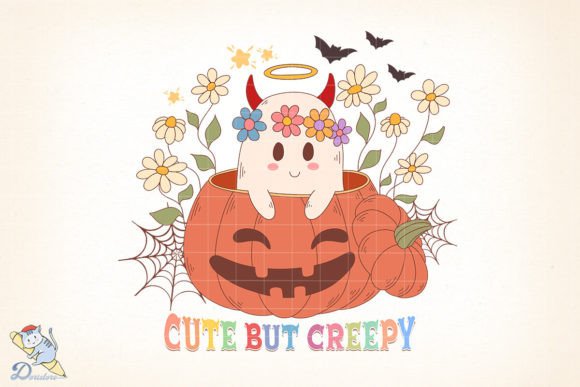
This guide explores how the Cute but Creepy Halloween collection—characterized by freehand flowing pen and ink lines with selective watercolour highlights—fits into broader creative and commercial processes. By examining the technical specifications and practical applications of these digital files, creators can optimize their projects for efficiency, quality control, and long-term utility.
Understanding the Aesthetic and Technical Foundation
The core appeal of the Cute but Creepy Halloween series lies in its artistic technique. The base imagery is drawn with pen and ink using a freehand, flowing line style. This method introduces organic imperfections and rhythmic variations that digital vector tools often struggle to replicate authentically. These drawings are then reproduced as high-resolution digital files, where specific areas are coloured with watercolour brushes to pick out highlight colours. This combination creates a textured, tactile feel that resonates with consumers looking for artisanal quality in mass-produced goods.
From a technical standpoint, the product delivers a set of PNG files housed in a zipped folder. Each image is provided at 300 DPI with dimensions of 4000×4000 pixels. This resolution is critical for maintaining clarity across various output mediums. Unlike lower-resolution web graphics, these assets are engineered for physical reproduction. The transparent background ensures seamless integration into complex layouts without the need for time-consuming masking or background removal tasks. Understanding these specifications is the first step in planning any project that utilizes these assets.
Integrating Assets into Pre-Production Planning
Before a single item is printed or a design is finalized, effective workflow management begins with asset organization. When working with the Cute but Creepy Halloween collection, the initial phase involves verifying file integrity and compatibility with your chosen software stack. Since these are raster-based PNG files rather than vector cutting files, they require different handling within design programs like Adobe Photoshop, Illustrator (as placed images), Canva, or specialized sublimation software.
For entrepreneurs planning a seasonal product launch, the pre-production stage should include a color calibration check. As noted in the product details, colors may vary between devices and printers. To mitigate this risk, professionals should create test prints on the actual substrates intended for the final product. This step allows for adjustments in brightness, contrast, and saturation before committing to a full run. It is also an opportune time to organize the zipped folder contents, perhaps renaming files to match specific SKUs or product categories to streamline the selection process during the design phase.
Furthermore, understanding the limitations of the format is essential. The absence of cutting files means these images are not designed for die-cutting machines or vinyl plotters that rely on vector paths. Instead, they are optimized for printing methods such as sublimation, waterslide transfers, or regular paper printing. Recognizing this distinction early prevents workflow bottlenecks where a creator might attempt to use the wrong tool for the job, saving valuable time and resources.
Execution: Printing and Production Workflows
Once the planning phase is complete, the execution stage focuses on applying the Cute but Creepy Halloween designs to physical products. The versatility of the 4000×4000 pixel resolution allows these files to be scaled significantly without losing detail, making them suitable for everything from small stickers to large-scale fabric prints.
Sublimation Printing
For those producing mugs, t-shirts, or aluminum panels, sublimation is a primary application. The high DPI ensures that the fine ink lines remain crisp after the heat transfer process. Because the background is transparent, the design can be positioned anywhere on the substrate without a white box surrounding it. This flexibility is crucial for creating professional-grade merchandise where the design appears to float naturally on the surface.
Waterslide Decals
The detailed nature of the pen and ink work makes these images ideal for waterslide decals used in model making, nail art, or customizing ceramics. The watercolour highlights add depth that flat digital gradients often lack. In this workflow, precision is key; the 300 DPI standard ensures that when the decal shrinks slightly during the firing or drying process, the intricate linework does not blur.
Regular Printing and Merchandising
For bloggers, educators, or publishers, these files serve as excellent content for printable planners, greeting cards, or packaging labels. The "cute but creepy" theme appeals to a wide demographic, allowing for cross-promotional opportunities. For instance, a teacher might use these designs for classroom decorations, while a boutique owner might apply them to seasonal gift wrap. The ability to print at any size provides the scalability needed for diverse inventory requirements.
Optimizing for Quality Control and Consistency
Maintaining consistency across a product line is a significant challenge for small businesses and freelancers. When using the Cute but Creepy Halloween assets, quality control measures must be implemented to ensure brand cohesion. Since the images feature hand-drawn elements, slight variations in stroke weight are inherent to the style. However, the digital reproduction ensures that every copy of the file is identical, providing a consistent baseline for all products.
To achieve this, establish a standard operating procedure (SOP) for printing. This includes using the same printer settings, paper type, or substrate batch for all items within a specific order. Documenting the exact color profiles used during the test phase helps replicate results in future batches. Additionally, because these are instant download files, version control becomes important. If you modify the files for a specific client or project, save those versions separately to avoid overwriting the original high-quality source files.
Efficiency is also improved by batching similar tasks. Instead of printing one item at a time, group orders by color profile or substrate type. This reduces setup time and minimizes waste. The transparent background feature further streamlines this process, as designers can quickly composite multiple images onto a single sheet for bulk printing, maximizing material usage.
Long-Term Utility and Strategic Application
The value of the Cute but Creepy Halloween collection extends beyond a single seasonal campaign. These digital assets represent a strategic investment in a creator's library. The timeless nature of the hand-drawn aesthetic means these designs do not suffer from the rapid obsolescence often seen in trendy, hyper-realistic digital art. They can be repurposed year after year with minor adjustments, such as changing the text overlay or combining them with new seasonal elements.
For marketers and content creators, these images offer a unique visual language that differentiates their brand. In a sea of generic clipart, the authentic feel of pen and ink combined with watercolour stands out. This distinctiveness can enhance engagement rates on social media platforms where visual appeal drives traffic. Furthermore, the high resolution allows for future-proofing; as printing technologies advance and demand for higher quality increases, these files will remain relevant and usable.
Integrating these assets into a broader business strategy involves viewing them as modular components. They can be part of a larger ecosystem of branded materials, from website banners to physical packaging. The ease of access provided by the instant download format supports agile workflows, enabling quick responses to market trends or last-minute design requests. Whether you are a freelancer managing multiple clients or a small business owner launching a new product line, the Cute but Creepy Halloween collection offers a reliable, high-quality foundation for creative execution.
Conclusion
Successfully leveraging the Cute but Creepy Halloween digital files requires a blend of artistic appreciation and technical discipline. By understanding the specific attributes of the pen and ink drawing style, the watercolour highlighting, and the high-resolution PNG format, creators can seamlessly integrate these assets into their production workflows. From the initial planning and color calibration stages to the final execution via sublimation or regular printing, attention to detail ensures professional results. Ultimately, these digital files are not just images; they are versatile tools that empower professionals and hobbyists to produce high-quality, distinctive products efficiently and effectively.