Sea Brush Strokes: Ocean Textures for Design
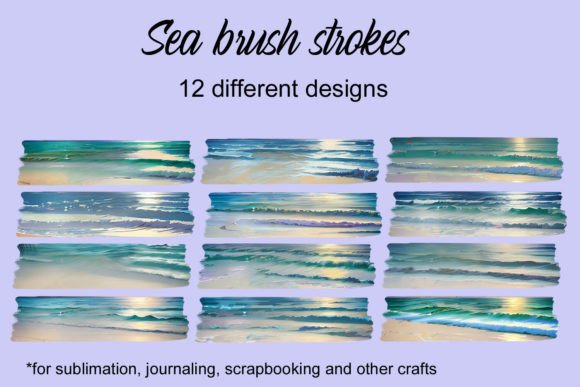
Creating a cohesive oceanic theme often requires more than just blue watercolor washes. It demands texture, movement, and the organic unpredictability of the tide. The Sea Brush Strokes collection addresses this need directly by offering twelve distinct digital patterns that capture the essence of the sea. Unlike static clipart or rigid vector shapes, these assets mimic the fluid motion of waves, foam, and currents. They are designed to be versatile tools for anyone looking to inject a sense of coastal life into their projects without spending hours painting from scratch.
What sets this specific collection apart is its origin and variety. These strokes were generated using CF Spark Flow, an advanced AI generator known for creating fluid, dynamic textures. This technology allows for a level of detail and randomness that is difficult to replicate manually in a short timeframe. The result is a set of twelve unique patterns, each varying in size and intensity, ready to be integrated into invitations, scrapbooks, typography, and merchandise. Whether you are a seasoned graphic designer or a hobbyist crafting planner stickers, these elements provide a professional foundation for your creative work.
Understanding the Collection Structure
The Sea Brush Strokes pack is not a one-size-fits-all solution; it is a toolkit designed for flexibility. With twelve different patterns, the collection covers a spectrum of marine aesthetics. Some strokes resemble the gentle lapping of water against sand, while others capture the chaotic energy of a stormy swell. The variation in size is particularly useful for layering. A large, sweeping stroke can serve as a background element, while smaller, intricate details can highlight specific areas of a design.
Because these assets are created with AI, they possess a unique quality of "controlled chaos." Traditional brushes often repeat the same pattern too obviously, breaking the illusion of nature. In contrast, the CF Spark Flow engine introduces subtle irregularities that make each stroke feel hand-painted. This makes them ideal for projects where authenticity matters. When you apply these to a digital canvas, they interact with other elements in a way that feels organic rather than manufactured.
Practical Applications for Creators
The utility of these brush strokes extends far beyond simple decoration. They function as structural components in various creative workflows. For instance, in the realm of digital invitations, a single wave stroke can frame text or separate sections of information elegantly. Instead of using a heavy border, a translucent layer of a sea stroke can add depth without cluttering the layout. This approach is especially effective for beach weddings, summer parties, or nautical-themed corporate events.
Scrapbookers and journalers will find these assets invaluable for adding dimension to flat photos. By placing a semi-transparent wave over the edge of a photograph, you can create the illusion that the image is emerging from the water. This technique adds a narrative layer to memory keeping. Similarly, for those designing planner stickers, the smaller variations in the collection are perfect for marking off tasks related to travel, hydration goals, or weekend getaways. The variety ensures you never run out of options when decorating a weekly spread.
Typography and Branding
One of the most sophisticated uses of the Sea Brush Strokes is in typography. Designers can use the larger, bolder patterns to underline headers or weave through letters to create custom fonts. Imagine a logo for a surf school where the text appears to be partially submerged by a digital wave. This integration of text and texture creates a memorable brand identity. Because the strokes are available in different sizes, you can scale them up for large banners or down for social media icons without losing clarity.
For small business owners focusing on sublimation printing, these assets open up new product lines. Mugs, tumblers, and tote bags often suffer from generic stock imagery. By utilizing these high-resolution brush strokes, you can create all-over prints that look like hand-painted ceramics. The organic flow of the patterns wraps naturally around cylindrical objects, avoiding the awkward repetition often seen in standard tiling patterns. This elevates the perceived value of the merchandise, allowing creators to charge a premium for designs that feel bespoke.
Adapting Styles for Different Audiences
Different audiences respond to different visual languages. The Sea Brush Strokes collection offers enough variety to cater to diverse demographics. For a younger audience, such as children's book illustrators or educators, the brighter, more energetic strokes can be used to depict playful scenes. These can be colored in or layered with bright yellows and teals to evoke a sunny day at the beach.
Conversely, for a more mature or corporate audience, the subtler, darker variations within the set work best. A marketing team might use a muted, grey-blue wave to represent stability and growth in a presentation slide deck. The key is understanding how opacity and color blending modes affect the final output. By adjusting the transparency of the CF Spark Flow generated strokes, you can shift the mood from whimsical to serious instantly.
Maintaining Consistency and Quality
While the freedom of AI-generated art is liberating, maintaining consistency across a project requires discipline. When using multiple strokes from the Sea Brush Strokes collection, it is crucial to ensure they share a common color palette. Even though the patterns differ, unifying them under a specific hue—such as a deep navy or a soft aqua—creates a cohesive visual language. This prevents the design from looking like a random assortment of clipart.
Organization is also key when working with twelve different assets. Label your files clearly based on their intended use: background, accent, or texture. When integrating these into software like Photoshop, Procreate, or Canva, group your layers logically. This makes it easier to adjust the position or opacity of specific elements later on. Remember that less is often more; a single well-placed stroke can be more impactful than a page covered in overlapping waves.
Getting Started with Your Projects
To begin using these resources effectively, start by identifying the primary emotion you want to convey. Do you want your audience to feel calm, adventurous, or refreshed? Once you have defined the mood, select two or three strokes from the collection that align with that feeling. Experiment with scaling them to different sizes to see how they interact with your layout.
The versatility of the Sea Brush Strokes means there is no wrong way to use them, but there are certainly better ways to maximize their potential. Whether you are printing physical goods or designing digital experiences, these twelve patterns provide a robust starting point. They bridge the gap between the raw power of AI generation and the nuanced needs of human creativity, offering a practical solution for designers who need high-quality ocean textures quickly and efficiently.