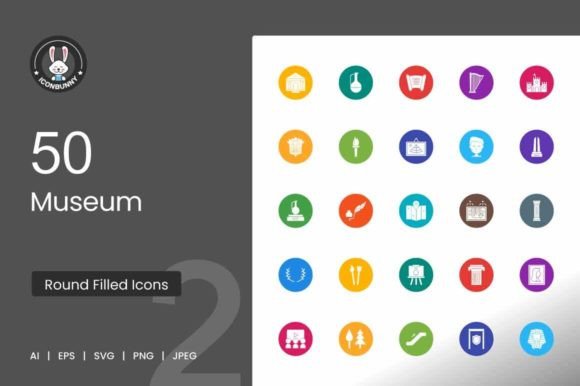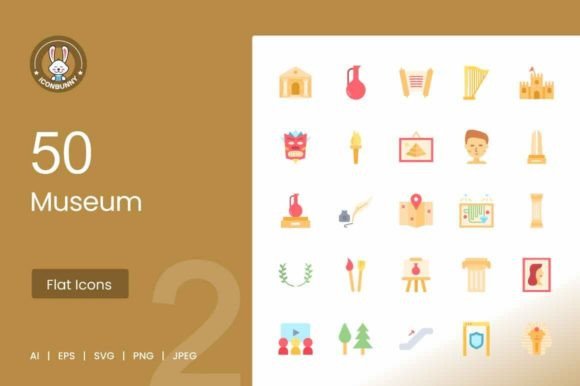
50 Museum Flat Multicolor Icons: A Visual Toolkit for Modern Storytelling
In the digital age, visual communication is often faster and more effective than text. Whether you are designing a mobile app for a local gallery or creating a presentation for an educational conference, the right imagery can bridge the gap between complex information and user understanding. The 50 Museum Flat Multicolor Icons set offers exactly that—a curated collection of 100 vector graphics designed to bring cultural heritage to life in a modern, accessible format. This isn't just a pack of clip art; it is a comprehensive visual language tailored for museums, educators, designers, and tech developers who need to convey the essence of history and art without clutter.
Bringing Cultural Heritage to Digital Screens
The primary strength of this icon set lies in its versatility across different platforms. In today's multi-device world, consistency is key. Imagine a visitor approaching a museum kiosk on their smartphone, looking for directions to the "Dinosaur" exhibit. They tap an icon representing a skeleton, and instantly, they understand where to go. Now, imagine that same icon appearing on a large touch-screen map at the entrance, or printed on a physical brochure handed out by a guide. The 50 Museum Flat Multicolor Icons are engineered to look crisp and recognizable at any size, thanks to their unigrid system design.
This scalability solves a common pain point for designers: maintaining visual integrity when an asset needs to be shrunk for a mobile notification badge or blown up for a billboard. Because the icons are available in AI, EPS, JPG, PNG, and SVG formats, you aren't locked into a single workflow. Web developers can drop the SVG files directly into their code for infinite scalability, while print designers can utilize the high-resolution EPS files for brochures and posters. The flat multicolor style ensures that these elements pop against both light and dark backgrounds, making them suitable for everything from sleek iOS apps to vibrant marketing campaigns.
Real-World Scenarios: From Apps to Exhibitions
Consider the practical application of specific icons within a real-world context. For a museum developing a wayfinding app, the Museum Building I and Tickets icons serve as intuitive entry points. Users don't need to read a label to know they are purchasing an entry pass or locating the main hall. As they navigate deeper into the app, icons like Escalator, Evacuation Plan, and Security Check become critical for safety and logistics. These aren't decorative; they are functional tools that reduce cognitive load and help visitors move through the space with confidence.
For curators and educators, the content-specific icons offer endless possibilities. A teacher preparing a virtual field trip can use the Dinosaur, Egyptian God, or Greek God icons to create interactive quizzes or flashcards. The Scroll of Paper and Ancient Book Exhibit icons can symbolize historical research sections, while the Broken Pillar and Bones Exhibit add a sense of archaeological discovery. Even the Video Screening icon helps users locate multimedia presentations, ensuring that modern storytelling techniques are clearly signposted alongside traditional artifacts.
Enhancing User Experience Through Design Consistency
One of the most significant challenges in graphic design is maintaining a cohesive aesthetic across a wide range of subjects. How do you make a CCTV Camera look visually compatible with a Jewel Exhibit? The answer lies in the disciplined design approach of this collection. By adhering to a strict grid system, every icon shares the same stroke weight, corner radius, and color palette logic. This creates a subconscious sense of harmony for the viewer.
When you use the 50 Museum Flat Multicolor Icons, you are essentially adopting a unified design language. This is particularly valuable for branding. A museum association might use these icons across all member websites to signal affiliation and quality. The Museum Tag and Art Museum Guide icons, for instance, can act as trust signals, indicating that a digital resource is curated and authoritative. The inclusion of items like Walkie Talkie and Jet Exhibit expands the scope beyond traditional fine art, allowing institutions focused on military history or aviation to find relevant assets without breaking the visual flow.
Industry Applications Beyond Traditional Museums
While the name suggests a focus on museums, the utility of these icons extends far beyond gallery walls. Educational publishers can integrate the Antique Jar, Harp, and Folded Map into textbooks and e-learning modules to illustrate historical concepts. Event planners organizing cultural festivals can use the Castle with Flag and Human Face icons for signage and promotional materials. Even interior designers might find value in the Pillar, Column, and Leaves Wreath icons when creating mood boards for spaces inspired by classical architecture.
Marketing agencies working with tourism boards can leverage the Painting of Woman and Monument Display icons to create engaging social media content that highlights local attractions. The ability to edit and scale these vectors means that a marketing team can tweak colors to match a specific campaign theme—perhaps shifting the palette to match a summer festival or a winter holiday event—while retaining the core shape and recognizability of the original design.
Practical Considerations for Implementation
Before integrating the 50 Museum Flat Multicolor Icons into your project, it is worth considering how they fit into your existing workflow. Since the pack includes both raster (JPG, PNG) and vector (AI, EPS, SVG) formats, you have flexibility, but you should choose wisely based on your end goal. For web and mobile applications, SVG is generally the superior choice due to its small file size and resolution independence. However, if you are handing off designs to a third-party printer who requires specific CMYK profiles, the EPS files will be your go-to.
Another consideration is the level of customization required. While the icons are ready to use, their vector nature allows for deep editing. You might want to simplify a Vase Exhibit icon for a minimalist interface or combine the Ink and Pen with the Scroll of Paper to create a custom composite illustration. The flat style is forgiving, meaning that even slight modifications usually maintain the overall aesthetic. However, keep in mind that because the icons are designed with a specific multicolor palette in mind, drastic color changes should be done thoughtfully to ensure they still stand out against various backgrounds.
Maximizing Usability Across Audiences
Ultimately, the success of any icon set depends on how well it communicates with its intended audience. The 50 Museum Flat Multicolor Icons are designed with maximum usability in mind, making them accessible to a broad demographic. The clear silhouettes and distinct shapes mean that even users with visual impairments or those viewing content on low-resolution screens can identify the symbols quickly. This inclusivity is crucial for public institutions like museums, which strive to welcome everyone.
Whether you are a developer building a complex navigation system, a designer crafting a beautiful brochure, or an educator creating an engaging lesson plan, these icons provide a reliable foundation. They eliminate the guesswork of finding disparate assets and ensure that your visual communication is professional, consistent, and effective. By leveraging this toolkit, you transform abstract concepts of history and culture into tangible, interactive experiences that resonate with users on every device and platform.