I m with the Banned Vintage Book: A Digital Art Evaluation
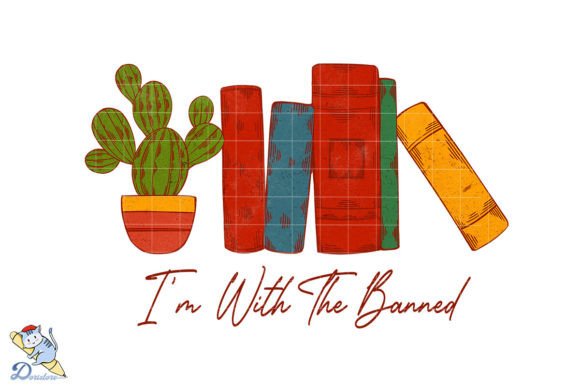
In the realm of digital art assets, the I m with the Banned Vintage Book collection offers a distinct aesthetic that merges historical literary themes with contemporary digital utility. This specific set of illustrations is characterized by a freehand flowing line style, originally drawn with pen and ink, and subsequently reproduced to provide customers with high-quality digital files. The artwork is further enhanced with watercolour brushes used selectively to pick out highlight colours, creating a soft yet defined visual appeal. For designers, crafters, and print-on-demand entrepreneurs, understanding the technical specifications and artistic limitations of this product is essential for making an informed purchasing decision.
Understanding the Product Composition
The core value of the I m with the Banned Vintage Book lies in its hybrid creation process. Unlike purely vector-based graphics generated by software algorithms, these images originate from physical media. The artist utilizes pen and ink to create the foundational structure, capturing the organic irregularities and fluidity of a human hand. This "freehand flowing line" technique imparts a sense of movement and character that rigid geometric lines often lack. Following the initial sketching phase, watercolour brushes are applied digitally or physically to introduce subtle colour accents. This approach ensures that the final image retains the texture of traditional media while remaining compatible with modern digital workflows.
Technically, the product is delivered as a zipped folder containing 20 PNG files. Each file is optimized for versatility, boasting a resolution of 300 DPI (dots per inch) with dimensions of 4000×4000 pixels. This specification is critical for users intending to print the artwork at various scales. The PNG format supports transparency, allowing the images to be overlaid onto different backgrounds without unsightly white boxes, which is a significant advantage for composite design work.
Reasons for Interest in Vintage Literary Themes
Several factors drive interest in the I m with the Banned Vintage Book series. Primarily, there is a growing market demand for vintage-inspired aesthetics that evoke nostalgia and intellectual curiosity. The theme of "banned books" resonates with audiences who value literary history, censorship debates, and the preservation of knowledge. Incorporating such imagery into products like journals, tote bags, or wall art allows creators to tap into a niche demographic that appreciates both history and design.
Furthermore, the combination of pen and ink with watercolour highlights offers a timeless quality. While digital trends fluctuate rapidly, traditional art styles tend to maintain their relevance over longer periods. This longevity makes the asset a safer investment for businesses looking to build a brand identity around classic, enduring visuals rather than fleeting fads. The specific use of watercolour to pick out a few highlight colours ensures the design remains elegant and uncluttered, avoiding the visual noise common in overly saturated digital art.
Benefits and Practical Applications
The primary benefit of this digital file set is its readiness for immediate production. With a resolution of 4000×4000 pixels at 300 DPI, the files are suitable for high-quality printing on a wide range of substrates. Users can scale the images up for large-format posters or down for small stickers without experiencing pixelation or loss of clarity. The inclusion of 20 unique PNG files provides variety, enabling the creation of cohesive collections or mixed-media projects without the need to purchase multiple separate assets.
For those utilizing Print-on-Demand (POD) services, the transparency of the PNG format is particularly advantageous. It simplifies the design process, as the artwork can be placed directly onto mockups for t-shirts, mugs, or notebooks. The freehand nature of the drawing also lends itself well to handcrafted items, such as scrapbooking, card making, and decoupage, where the organic lines complement physical textures.
Tradeoffs and Considerations
While the I m with the Banned Vintage Book offers significant advantages, potential buyers must consider certain tradeoffs. Because the artwork is raster-based (pixel-based) rather than vector-based, there are limits to how much it can be manipulated. Unlike SVG or EPS files, which can be resized infinitely without quality loss, these PNG files have a fixed maximum resolution. Although 4000×4000 pixels is substantial, extreme enlargement beyond standard poster sizes may eventually result in visible pixelation if not handled correctly.
Additionally, the artistic style is fixed. The freehand flowing line and specific watercolour highlights cannot be easily altered without advanced photo editing skills. If a user requires a design where every line can be adjusted or recoloured independently, this static image format may not be suitable. The reliance on the original artist's interpretation means that customization is limited to placement, scaling, and background integration rather than structural modification.
Situations Where This Asset Is a Strong Fit
This digital collection is an excellent fit for independent authors, publishers, and stationery brands focusing on literary themes. The specific subject matter aligns perfectly with products targeting book lovers, librarians, and educators. For instance, using these images for the covers of anthologies about censored literature or for promotional materials for reading clubs would be highly effective. The high resolution ensures that the textural details of the ink and watercolour are preserved even when printed on premium paper stocks.
It is also a strong choice for small-scale POD businesses that prioritize speed and ease of use. Since the files come ready to print at any size within reasonable limits, designers can bypass the time-consuming process of creating custom illustrations from scratch. The pre-made aesthetic saves valuable time, allowing the business owner to focus on marketing and customer acquisition.
When Alternatives May Be Worth Considering
There are scenarios where seeking alternatives to the I m with the Banned Vintage Book might be prudent. If a project requires full vector scalability—for example, creating a massive billboard or a complex logo that needs frequent resizing—vector formats like AI or EPS would be superior. Similarly, if the design brief demands a specific colour palette that differs significantly from the original watercolour highlights, a vector illustration or a customizable template would offer greater flexibility.
Furthermore, if the end goal involves extensive animation or interactive web elements, static PNG files are insufficient. In such cases, animated GIFs or layered PSD files would be necessary. Buyers should also consider licensing restrictions; if the intended use involves mass manufacturing or resale of the unaltered image, verifying the commercial license terms is essential before proceeding.
Decision-Making Insights
Before acquiring the I m with the Banned Vintage Book, prospective users should evaluate their specific workflow requirements. Ask whether the fixed artistic style aligns with your brand identity. If your brand relies on clean, minimalist lines, the organic flow of the pen and ink might feel too busy. Conversely, if you aim for a rustic, artisanal look, this style is ideal. Additionally, verify that the 300 DPI resolution meets the specific output requirements of your printer or manufacturer. Most professional printers accept 300 DPI at the final print size, but always confirm with your service provider to avoid unexpected issues.
Ultimately, the decision rests on balancing the desire for high-quality, pre-designed vintage art against the need for total creative control. For those who appreciate the charm of hand-drawn aesthetics and require reliable, high-resolution files for print applications, this collection presents a compelling option. By understanding both the capabilities and the constraints of these digital files, creators can effectively integrate them into their projects, ensuring the final output meets both aesthetic and functional standards.